
The Battery Decides How Your Electric Forklift Works
Ask a warehouse manager what they like about their electric forklift and the answer is usually about the truck: quiet, no fumes, cheap to run. Ask what frustrates them and it is almost always the battery. How long it lasts, when it can be charged, where the charging happens and who looks after it all shape the working day more than the truck itself.
Lithium-ion has become the headline option in almost every manufacturer’s brochure. It is a genuine step forward for many operations, but not for all of them. This guide sets out the differences honestly, with the UAE in mind: long shifts, summer heat and a growing number of cold stores.
The Short Answer
- Lithium-ion usually wins when trucks run two or three shifts, when operators can top up during breaks, or when you would rather not give floor space to a battery room.
- Lead-acid still makes sense for single-shift work, low daily hours and fleets where the lowest purchase price matters most.
- Heat and cold change the picture for both chemistries, so check the rated temperature range against where the truck will actually work and charge.
How the Two Technologies Compare
| Lead-acid | Lithium-ion | |
|---|---|---|
| Time to full charge | 8 – 12 hours (Toyota) | About 80 minutes; 30 minutes for 50% (Toyota) |
| Cooling after charge | Recommended: the “8-8-8” cycle (Crown) | Not required |
| Charging cycles | 1,500 (Toyota) | 5,000 (Toyota) |
| Routine maintenance | Regular water topping and a weekly equalise charge | None (Toyota) |
| Charging area | Designated, ventilated area for gassing batteries | No separate battery room (Linde) |
| Energy efficiency | Roughly 80% when charging (Raymond) | Around 95% (Raymond) |
| Purchase price | Lowest initial cost (Toyota) | Roughly two to three times lead-acid (Raymond) |
Figures are from Toyota Material Handling Europe, Crown, Linde and Raymond’s dealer network. Cycle ratings vary by product: Toyota’s own US launch of its 5/35 lithium batteries quotes a warranty cycle life of up to 3,500 cycles, so compare like with like when reading quotes.
Charging and Shift Patterns
Conventional lead-acid batteries are built around a full cycle. Crown describes it as the 8-8-8 rule: the battery discharges over eight hours, recharges over eight hours and should cool for eight hours once charged. One battery therefore covers one shift. Crown recommends that operations running multiple shifts keep multiple batteries, so trucks can swap to a charged one while the flat one charges and cools.
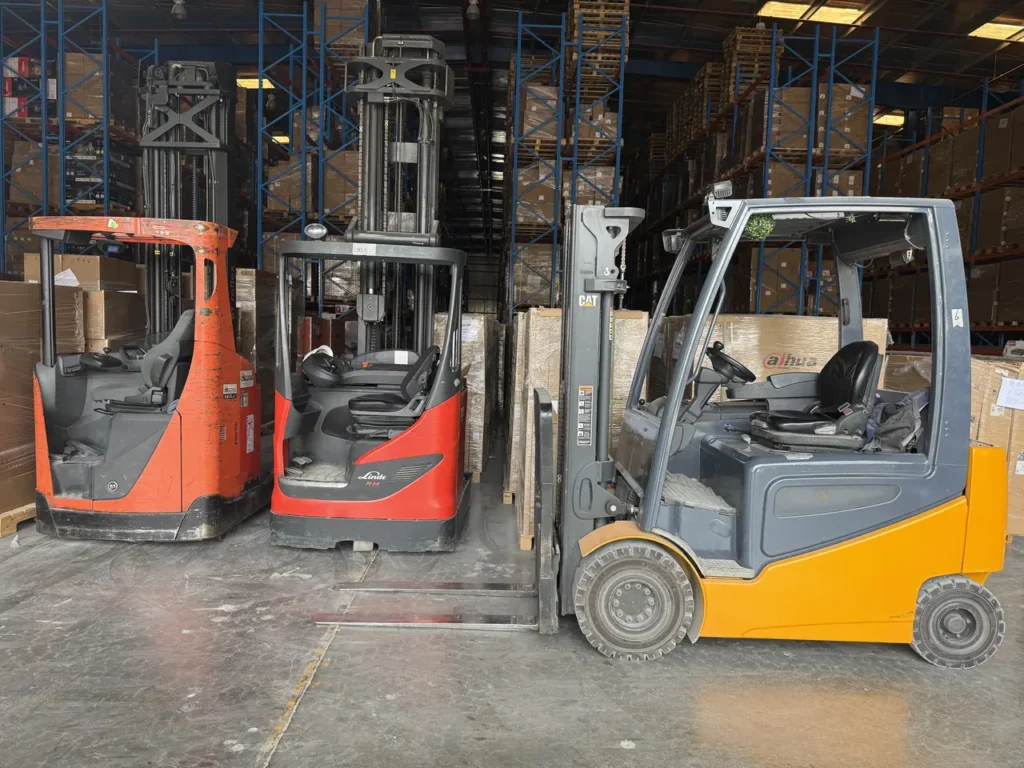
Lithium-ion turns this around. Linde says that even an interim charge of just a few minutes is not only allowed, but even preferred, and that its batteries can complete a full charge within an hour. Toyota points out that this removes the need to change batteries during the day. For a two- or three-shift distribution centre, that can mean one battery per truck instead of two or three, and no changeover time at shift handover.
Safety: What Changes in the Charging Area
Lead-acid batteries give off gas as they charge. OSHA’s guidance is blunt: flammable hydrogen gas is always present during battery recharging. The UK HSE adds that hydrogen and oxygen are produced more quickly as the battery approaches full charge, and that mixtures with air containing from 4% to 75% hydrogen will readily ignite and explode.
That is why OSHA’s rule for powered industrial trucks, 29 CFR 1910.178(g), requires charging installations in designated areas with facilities for flushing spilled electrolyte, fire protection, protection from truck damage and adequate ventilation, and prohibits smoking there. HSE’s COSHH essentials sheet SR18 suggests 5 to 10 air changes per hour with a through draught where batteries are charged.
Lithium-ion batteries do not gas in normal use. Linde says there is no longer any need for a separate battery room with gas extraction, and no leaking of battery gases or acid. They still need the manufacturer’s charger and a sensible charging location, and any pack that has been damaged should be handled exactly as the manufacturer instructs.
The UAE Question: Heat
Heat shortens battery life. EnerSys, writing about its lead-acid batteries, says service life falls by 50 percent for every 10 °C increase above 25 °C. On that rule, a battery that would last six years at 25 °C lasts about three at 35 °C, and a charging corner next to a sun-facing shutter in August is much hotter than that.
Lithium-ion is not immune either, and ratings differ widely. Hyster rates its lithium-ion big trucks for ambient temperatures of -18 °C to +43 °C, while Toyota says its 5/35 lithium batteries have integrated thermal management for temperatures from -30 °C to 50 °C (22 °F below zero to 122 °F). UAE yards regularly pass 43 °C in summer, so ask for the rated range in writing and plan to charge in a shaded, ventilated spot. Our summer forklift maintenance checklist covers batteries and cooling in more detail.
Cold Stores Are the Opposite Problem
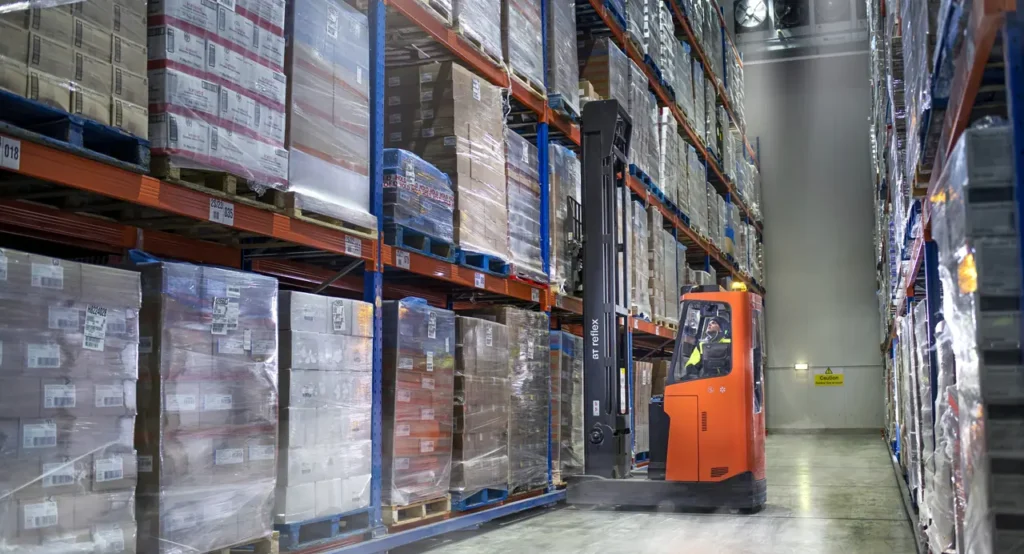
Toyota explains that in cold storage, lead-acid batteries don’t perform as well, both because of condensation and because cold slows the chemical reaction. Lithium packs can be built with heaters for cold environments, and Hyster says its heavy-duty lithium-ion truck can go from the charger straight to -20 °C. If you run a cold store forklift, battery choice matters as much as the truck specification.
Look at the Whole-Life Cost, Not the Price Tag
Toyota is clear that lead-acid batteries have the lowest initial cost but need regular maintenance to stay in peak condition. Raymond’s dealer network estimates that lithium-ion costs roughly two to three times as much up front, but typically delivers two to three times the charge cycles, often meaning one lithium battery outlasts two lead-acid replacements.
When you compare, include the costs that do not appear on the battery quote: spare batteries for extra shifts, electricity lost in charging, watering and equalising labour, changeover time, and the floor space a battery room takes up. In a warehouse paying UAE rents, that last item alone can be significant (see how to maximise vertical warehouse storage).
End of Life and Recycling
Lead-acid has a mature recycling chain: Battery Council International reports a 99% recycling rate for lead batteries in the United States, and Toyota describes them as 98% recyclable. For lithium-ion, Linde says up to 95 percent of the metals can be recovered and used in new batteries. Either way, agree how batteries will be collected at end of life before you buy.
Which Battery Is Right for Your Fleet?
Work through these questions in order:
- Hours and shifts. One shift a day with an overnight charge suits lead-acid. Two or three shifts favour lithium-ion or a spare-battery system.
- Charging opportunities. If operators take regular breaks near a charger, lithium-ion can be topped up then and rarely runs flat.
- Space. Do you have, or want to keep, a ventilated battery room? Lithium-ion frees that space.
- Temperature. Check the rated ambient range against your hottest yard and your coldest chamber.
- How long you keep the truck. The longer the life, the more lithium-ion’s extra cycles count.
- Buy or rent. If you rent, the battery and its upkeep become the supplier’s problem.
Renting Takes the Battery Decision Off Your Plate
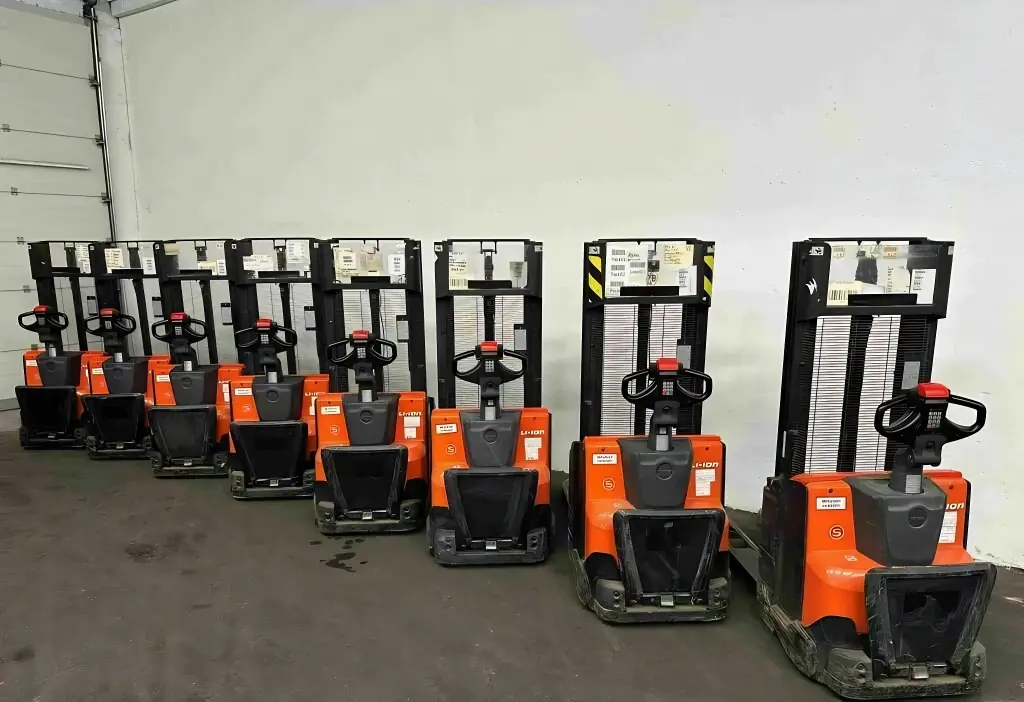
Every electric forklift Liftronic rents comes with its battery, serviced by our own technicians. Tell us how many hours a day the truck will work and how many shifts you run, and we will specify the battery and forklift charger to match. The same applies to reach trucks, 5-ton electric forklifts and electric pallet stackers.
Ask us which battery suits your shifts.
Frequently Asked Questions
How long does a lithium-ion forklift battery last?
Toyota Material Handling Europe quotes 5,000 charging cycles for lithium-ion against 1,500 for lead-acid, although ratings vary by product and some lithium batteries are warranted for fewer cycles. Real life depends on how hard the truck works, how it is charged and how hot it gets.
Can a lead-acid forklift battery be opportunity charged?
Conventional lead-acid batteries are designed for a full cycle. Crown describes the 8-8-8 rule: discharge over eight hours, recharge over eight hours, then cool for eight hours. Short top-up charges during breaks are what lithium-ion batteries are designed for.
Do lithium-ion forklift batteries need a battery room?
Linde says lithium-ion removes the need for a separate battery room with gas extraction, because the batteries do not release gas in normal use. You still need the manufacturer’s charger and a suitable charging location.
Do lithium-ion forklift batteries work in UAE summer heat?
They can, but check the rating. Hyster rates its lithium-ion big trucks for ambient temperatures up to +43 °C, while Toyota quotes thermal management up to 50 °C for its 5/35 batteries. Charge in a shaded, ventilated area and confirm the rated range before buying.
Can I fit a lithium-ion battery to my existing electric forklift?
Sometimes. It depends on the truck model, its software and the charger, so check with the truck manufacturer before buying a replacement pack.
References
- Toyota Material Handling Europe — Energy solutions (lead-acid vs lithium-ion)
- Toyota Material Handling (US) — 5/35 lithium-ion battery launch (26 Aug 2025)
- Toyota Material Handling (US) — Lithium-ion in extreme temperature applications (15 Jul 2021)
- Crown Equipment — Optimise battery life expectancy with conventional charging
- Linde Material Handling — Lithium-ion technology
- Associated Solutions (Raymond) — Lead-acid vs lithium-ion (1 Aug 2026)
- Hyster — Where can you use a lithium-ion forklift?
- EnerSys — Battery service life and temperature
- OSHA — 29 CFR 1910.178 Powered industrial trucks, paragraph (g)
- OSHA eTool — Powered industrial trucks: electrical power sources
- UK HSE — INDG139 Using electric storage batteries safely
- UK HSE — COSHH essentials SR18, Charging batteries for electrically powered vehicles
- Battery Council International — National recycling rate study (14 Nov 2019)