Liftronic

Flat (Large-Sided) Clamp in UAE

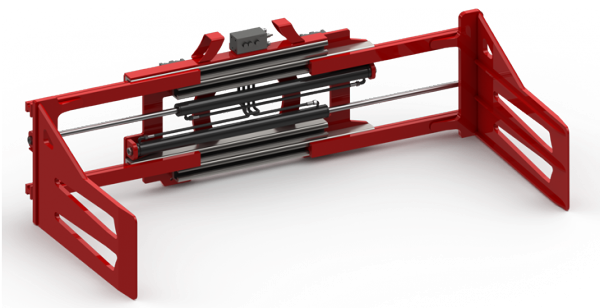
A flat clamp, also called a large-sided clamp, is a hydraulic forklift attachment with wide, flat arms that grip large box-shaped loads from two sides, so crates, metal boxes and appliances can be handled without a pallet.

Because the arms cover a large area of the load's face, the clamping force is spread out rather than concentrated at a few points. That makes the flat clamp suitable for bulky, rigid loads that would be awkward or impossible to lift with forks.

Liftronic Machinery supplies flat clamps for sale in Dubai, Abu Dhabi, Sharjah and across the UAE. The right clamp depends on load weight and size, how rigid the load is, the opening range needed, and the forklift's capacity, carriage class and hydraulics.

Get a Flat Clamp Quote

Flat (Large-Sided) Clamp

Why use a flat clamp instead of forks?

Forks need a pallet, skid or fork pockets under the load. Many large boxed and crated goods are not delivered that way, and adding pallets costs money, takes height in containers and creates pallet returns.

A flat clamp grips the load from the sides instead. It can pick loads from tight stacks, place them against walls or other loads with no fork gap, and load containers more densely. It also avoids fork damage to the bottom of crates and cartons.

How a flat clamp works

  1. Open the arms wider than the load.
  2. Approach square to the load so both arms sit flat against opposite faces.
  3. Close the arms. A pressure relief valve limits the clamping force to the set value.
  4. Lift, then use the side-shift function to line the load up with its destination.
  5. Lower the load fully before opening the arms.

Some designs move both arms equally; others have one fixed and one moving arm. Friction pads on the arm faces increase grip without extra pressure.

Typical loads and applications

  • Home appliances: Refrigerators, washing machines, freezers and televisions, singly or in stacks.
  • Crates and boxes: Wooden crates, metal stillages and boxed machine parts.
  • Furniture: Flat-packed and boxed furniture moved without pallets.
  • Container and trailer loading: Packing goods tightly with no pallet space lost.
  • Warehousing and logistics: Palletless storage of large, uniform boxed goods.

Typical flat clamp specifications

SpecificationTypical value
Carriage classISO 2 and 3
MountingHook-on (pendant-mounted)
Typical capacity range700 – 2,000 kg
FunctionClamp with side shift
Hydraulic services neededTwo functions
Arm size and opening rangeModel dependent; chosen for the load dimensions
Pressure controlRelief valve; adjustable on some models

Exact arm dimensions, opening range and attachment weight must be taken from the manufacturer's data.

Flat clamp, carton clamp or bale clamp?

AttachmentBest forArm design
Flat (large-sided) clampRigid crates, boxes and bulky boxed goodsWide, flat arms with side shift
Carton clampStacked cartons and white goods, often high volumeLarge contact pads, often with rotation or tilt
Bale clampCompressed paper, textile and recycling balesHeavier arms, sometimes ribbed or toothed

The categories overlap. The load's rigidity, surface and weight usually decide which is right.

How to choose a flat clamp

  1. Record the weight of the heaviest load, including any stacked together.
  2. Measure the narrowest and widest loads to set the opening range.
  3. Measure load height and length to size the arms so they cover enough of the load face.
  4. Assess how rigid or fragile the load is, which sets pad material and clamping pressure.
  5. Decide whether loads are handled singly or stacked.
  6. Check the forklift's capacity, carriage class and number of auxiliary hydraulic functions.

Capacity and compatibility

A flat clamp is heavier than forks and holds the load further from the carriage, so the forklift's residual capacity is lower than its rated capacity. Available capacity must be confirmed from the forklift's load chart together with the clamp's weight and load centre, and the capacity plate must reflect the truck and clamp combination.

The truck needs two auxiliary hydraulic functions: one to clamp and one to side shift. Clamping pressure must also be set for the load: too low and it can slip; too high and it can crush cartons or dent appliance panels.

Safe use

Only clamp loads that are strong enough to take side pressure. Keep the arms square to the load, never lift a load gripped only at its corners, and lower before releasing. Check pads for wear, as worn or contaminated pads reduce grip. Operators should be trained on clamp attachments, because a dropped clamped load gives little warning.

Get a Flat Clamp Quote

Send us the following details:

  • Load type
  • Heaviest load weight
  • Minimum and maximum load dimensions
  • Single or stacked handling
  • Forklift brand, model and capacity
  • Carriage class and hydraulic functions

Request a quoteCall +971 52 248 3348

Flat clamps gallery

  • Red flat large-sided clamp attachment

Frequently Asked Questions

What is a flat clamp used for?

Handling large boxed or crated goods, such as appliances, wooden crates and metal boxes, without pallets.

How much can a flat clamp lift?

Typical flat clamps are rated from about 700 kg to 2,000 kg, subject to the forklift's residual capacity with the clamp fitted.

Is a flat clamp the same as a carton clamp?

They are closely related. Carton clamps are optimised for stacked cartons and white goods; flat clamps are wide-armed clamps with side shift used on larger boxed loads.

Can a flat clamp damage the load?

It can, if the pressure is set too high or the load is not strong enough for side gripping. The relief valve and the right pads prevent most damage.

Does a flat clamp reduce forklift capacity?

Yes. The clamp's weight and the forward load centre reduce the forklift's residual capacity.

What hydraulics does a flat clamp need?

Two auxiliary functions: one for clamping and one for side shift.

Can a flat clamp handle more than one load at once?

Yes, stacked loads can be clamped together if the arms are tall enough and the combined weight is within capacity.

Can I fit a flat clamp to my existing forklift?

Usually, if the carriage class matches, the truck has two auxiliary functions and the residual capacity suits the load.

Scroll to Top

Rent a Forklift